


Gourmet gifting has quietly become one of the fastest-growing segments of the broader gift economy, and for good reason. In a world oversaturated with mass-produced products, people crave things that feel personal and are crafted with care. Food engages the senses in a way no candle or coffee mug ever will, and it creates a shared experience that strengthens relationships in ways researchers are only beginning to quantify. This guide breaks down everything you need to know about gourmet gifting.
The Anatomy of a Gourmet Gift
A gourmet food gift is defined by three pillars:
- Ingredient quality means the products themselves are a cut above what you'd find at a typical grocery store. Think aged Gruyère rather than processed cheddar. Think Marcona almonds roasted in small batches with rosemary and sea salt rather than a tin of mixed nuts from a warehouse club. The items in a gourmet gift are often artisanal, produced by makers who prioritize craft over scale, and they're sourced with the same discernment a chef would apply to building a tasting menu.
- Intentional curation is what separates a gourmet gift from a random assortment of fancy products. The best gourmet gifts feel like a composed experience: flavors balance and complement one another, textures vary from crisp to creamy to chewy, and every item serves a purpose. A well-curated board might pair a bold blue cheese with fig jam and walnut crisps, or set a silky prosciutto beside cornichons and grainy mustard. Four to six thoughtfully selected pieces feel more premium and more usable than an overstuffed box.
- Presentation ties the experience together. Gourmet gifts arrive looking like something worth savoring, not something that needs rescuing from a tangle of plastic wrap and packing peanuts. The visual impact matters because it sets the emotional tone before a single bite is taken.
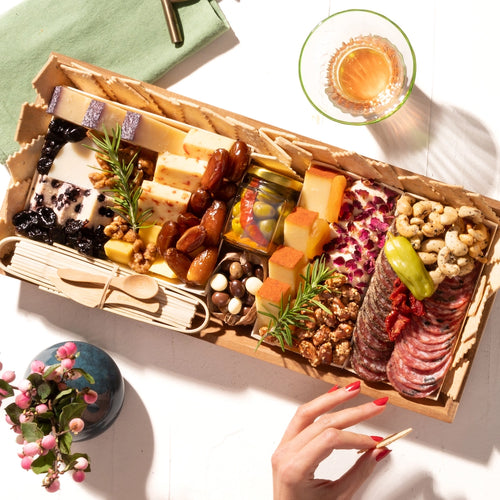
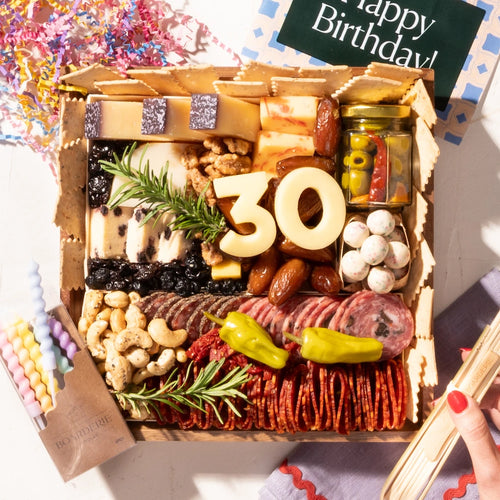
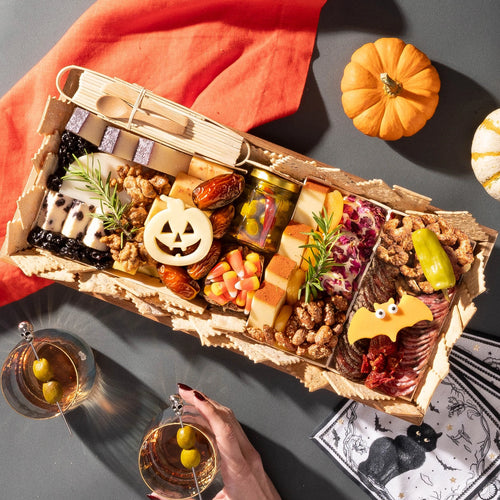
When someone opens a beautifully arranged charcuterie board or a sleek gift box with neatly nested jars and artisan crackers, the presentation itself becomes part of the gift's message: I thought about this. I chose this for you.

Why Food Gifts Hit Differently Than Material Ones
Both giving and receiving gifts activate core brain areas associated with reward and pleasure, triggering the release of dopamine, oxytocin, and endorphins. Experiential gifts, gifts that are consumed, shared, or enjoyed in the moment, strengthen social relationships more effectively than material possessions, primarily because they elicit stronger emotional responses while being enjoyed.
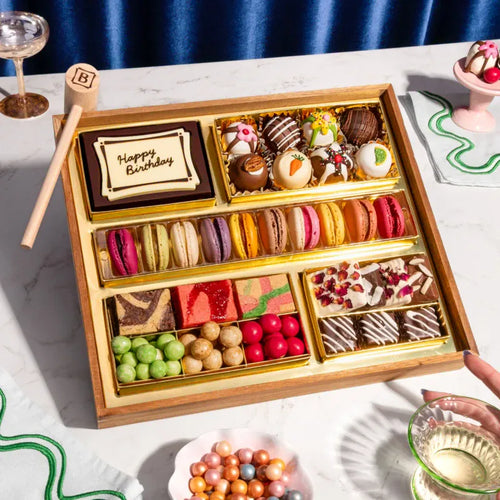
Food is the ultimate experiential gift. It engages taste, smell, sight, and touch simultaneously. It invites ritual: the act of pairing and sharing. And unlike a physical object that might sit unused, food demands to be experienced, often communally. A gourmet charcuterie board placed on a kitchen counter becomes the centerpiece of a gathering. A curated box of artisan chocolates turns an ordinary Tuesday evening into something worth pausing for.
There's also a universality to food gifting that other categories can't match. You don't need to know someone's taste in décor or fashion to send them something they'll genuinely enjoy. According to data from the Freedonia Group's Packaged Facts division, nearly 60% of U.S. households engage in food gifting annually, and gourmet baskets lead all food gift subcategories with over 40% of product preference among buyers. The numbers confirm what instinct already suggests: when you want a gift that connects, food is the safest and most impactful bet.
How Gourmet Gifting Has Evolved Beyond the Traditional Basket
Today's leading gourmet gift companies focus on fewer, better items sourced from small-batch producers. The artisanal food gifting segment is growing at roughly 12% year over year, significantly outpacing the broader food gift market's 5.2% average growth. Consumers are gravitating toward products with provenance because these details signal care and quality in a way that mass production simply cannot.
No product better illustrates this evolution than the gourmet charcuterie board. Consumer search interest in charcuterie boards has surged over 800% in the past five years, and the category has become a dominant force in both personal and corporate gifting. Charcuterie boards are visually stunning, immediately shareable, and endlessly customizable to accommodate different palates and dietary preferences.
Companies like Boarderie have built entire businesses around this shift, reimagining charcuterie as a deliverable gift experience. Boarderie ships fully assembled, ready-to-graze boards overnight. Each one is hand-arranged with artisan cheeses, premium cured meats, seasonal fruits, nuts, and accompaniments sourced from producers around the world. The model works because it solves the central problem of food gifting at scale, delivering something that looks and tastes handcrafted without requiring the recipient to do any assembly.
What Separates a Forgettable Gift From an Unforgettable One
Curation Over Quantity
Resist the instinct to equate more items with more value. A tightly curated selection of five or six exceptional products will always outperform a sprawling basket of twenty mediocre ones. Look for gifts where the items relate to each other. Where the flavors, textures, and categories have been chosen to create a cohesive tasting experience rather than a random assortment.
Freshness and Perishability
Shelf-stable products are convenient, but fresh and semi-perishable items communicate a higher level of quality and care. The key is choosing a provider whose logistics match their product quality. Overnight shipping, temperature-controlled packaging, and delivery timing that ensures the gift arrives fresh are non-negotiable for perishable gourmet gifts.
Dietary Inclusivity
The gourmet gifting market has responded to the broader wellness movement with remarkable speed. Approximately 50% of gift baskets now include health-focused options, and gluten-free, organic, and vegan product offerings have grown by 20% year over year. When selecting a gourmet gift, particularly for someone you don't know well or for a group, choosing options that accommodate common dietary preferences significantly reduces the risk of your gift going unenjoyed.

The Unboxing Experience
First impressions are formed before the first bite. The packaging, arrangement, and materials contribute to the gift's emotional impact. Research into consumer psychology consistently shows that presentation influences perceived value. A gourmet gift that arrives in elegant, purposeful packaging primes the recipient to value the contents more highly than the same products tossed loosely into a generic box.
Gourmet Gifting in the Corporate World
Corporate gifting has become one of the most powerful applications of the gourmet food gift, and the data reflects it. 65% of companies now send food gifts to employees or clients at least once a year, and the broader corporate gifting market has surpassed the $1 trillion mark globally. Food gifts are particularly favored in professional settings because they sidestep the pitfalls of other corporate gift categories. They're universally appropriate, and they're consumable, meaning they don't linger as unwanted desk clutter.
The shift in corporate gifting is away from obligatory, logo-stamped swag and toward gifts that feel personal and premium. A gourmet charcuterie board delivered to a client's office after a successful project close tells a different story than a branded pen set. Premium wine and cheese baskets alone have grown by 18% in order volume as companies recognize that the quality of a gift directly reflects on the quality of the brand sending it.
Navigating Occasions: When Gourmet Gifts Make the Strongest Impact
Gourmet gifts are versatile, but certain occasions amplify their impact. Understanding when a food gift is the right gift helps you deploy the category strategically:
- Holidays and year-end celebrations are the highest-volume period for gourmet gifting, and for good reason. During the holiday season, people are gathering, entertaining, and sharing meals. A gourmet gift that arrives ready to serve slots seamlessly into the season's rhythm.
- Client and employee appreciation moments deserve particular attention. Thank-you gifts that arrive after a project milestone, a strong quarterly performance, or a successful partnership renewal carry more weight than holiday gifts because they're unexpected. The element of surprise creates a disproportionately positive impression.
- Sympathy and support occasions are often overlooked in discussions of gourmet gifting, but they represent one of the category's most meaningful applications. When someone is grieving, recovering from illness, or navigating a difficult life transition, a prepared food gift is profoundly practical. It provides nourishment without requiring the recipient to cook, and it conveys care immediately in a way that flowers or cards alone cannot.
- Housewarmings, weddings, and new baby celebrations round out the most common occasions. In each case, a gourmet food gift works because the recipient is typically too busy or overwhelmed to cook elaborate meals, and the gift offers an immediate moment of enjoyment amid chaos.
The $42 Billion Market You Should Understand
The U.S. consumer and corporate food-gifting market is valued at $42 billion, with average annual growth projected at 5.2% through 2028. Globally, the food gifting market was valued at approximately $33.2 billion in 2024 and is expected to reach $53.8 billion by 2033, growing at a CAGR of 5.16%.
Several forces are driving this growth. Personalization has become a baseline expectation rather than a premium add-on, as 34% of buyers now opt for customized names, messages, or branding on their gifts, a figure that's increased 15% over just two years. Sustainability is reshaping packaging and sourcing decisions, with eco-conscious consumers increasingly choosing brands that use recyclable or compostable materials. And health-conscious options have moved from niche to mainstream, with organic and allergen-friendly products now standard offerings across the leading gourmet gift platforms.
The fastest-growing channel is online direct-to-consumer, which makes sense given that digital platforms offer the combination of personalization, convenience, and visual merchandising that gourmet gifting demands. Subscription-based food gifting has also exploded, with over 2 million active subscribers globally and the subscription box industry projected to reach $25 billion in 2025.
How to Choose a Gourmet Gift Provider Worth Trusting
Not all gourmet gift companies deliver on the promise their marketing makes. Here's a framework for evaluating providers before you buy.
- Source transparency matters. The best gourmet gift companies can tell you where their products come from: the specific dairies, charcuteries, and producers they work with. If a brand can't answer basic questions about provenance, the "gourmet" label is likely more marketing than reality.
- Shipping and logistics are the make-or-break factor for any perishable food gift. Ask how items are packaged for transit, what carrier is used, and what the delivery window looks like. Premium providers ship overnight with temperature-controlled packaging and offer specific delivery-date scheduling, so the gift arrives fresh and at the right moment.
- Read reviews for the experience, not just the product. A gourmet gift needs to impress on arrival. Reviews that mention "arrived damaged," or "looked nothing like the photo" are red flags that the provider hasn't solved the logistics challenge.
- Evaluate the customization options. Whether you're gifting personally or at a corporate scale, the ability to include a personal message, accommodate dietary restrictions, or add branded elements transforms a generic transaction into a tailored experience.
- Check the range of price points. A trustworthy gourmet gift company offers options across multiple budgets without sacrificing quality at the lower end. If the only option under $100 feels like an afterthought, the company is probably optimized for volume rather than value.
Gourmet gifting is about demonstrating that you thought about the recipient. The category has matured well beyond the generic fruit-basket era into a sophisticated market driven by artisanal quality and logistics that can deliver perishable perfection to any doorstep in the country.

Whether you're thanking a client who just renewed a major contract, celebrating a friend's milestone, or simply letting someone know you're thinking of them, a well-chosen gourmet gift communicates something material objects struggle to express: I wanted to give you something worth savoring. In a world of forgettable gestures, that's the kind of message that stays with people long after the last bite is gone.
Sources:
- Food Gifting Market Size & Growth Forecast 2025-2033 — Business Research Insights
- Gourmet Food Market Size & Industry Report 2026-2034 — Fortune Business Insights
- Beyond the Basket: Growth Projected for the $42 Billion Food Gifting Market — The Freedonia Group
- Corporate Gifting Market Research 2025-2033 — GlobeNewsWire
- Experiential Gifts Foster Stronger Social Relationships — UCLA Anderson School of Management
- Understanding the Brain Science Behind Giving and Receiving Gifts — University of Arizona News
- Boarderie Charcuterie Board Delivery — Taste of Home
- Boarderie: A Recipe for Success — FedEx Small Business
- Gift Industry Statistics: Market Data Report 2026 — Gitnux
- A Guide to the Etiquette of Gifts & Giving — Food52
