
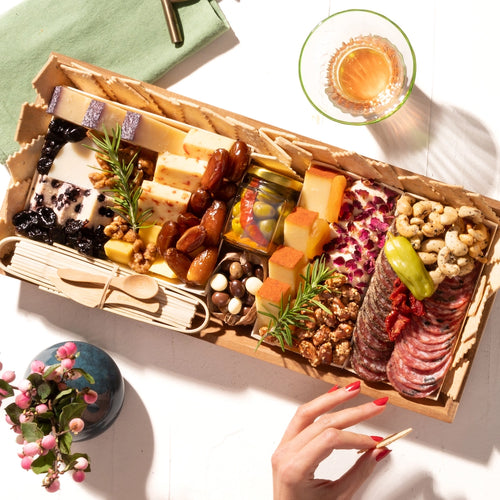
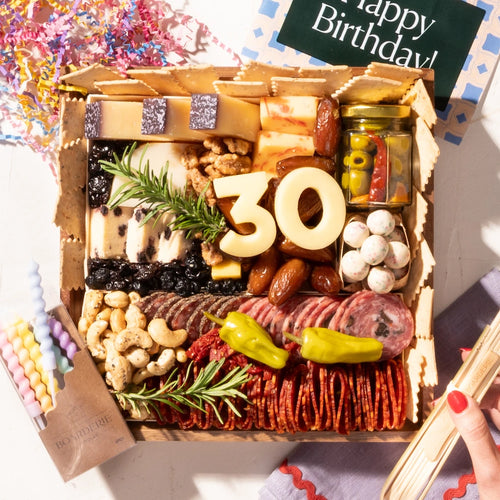
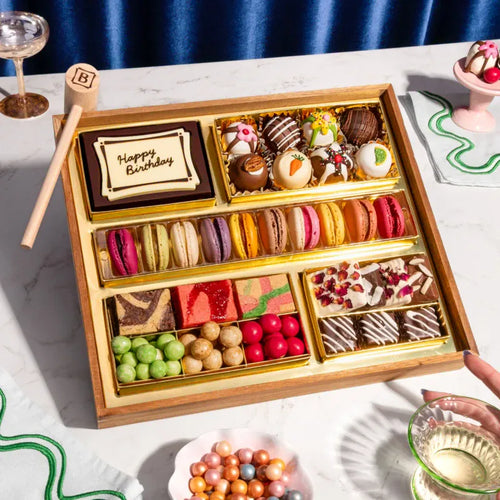
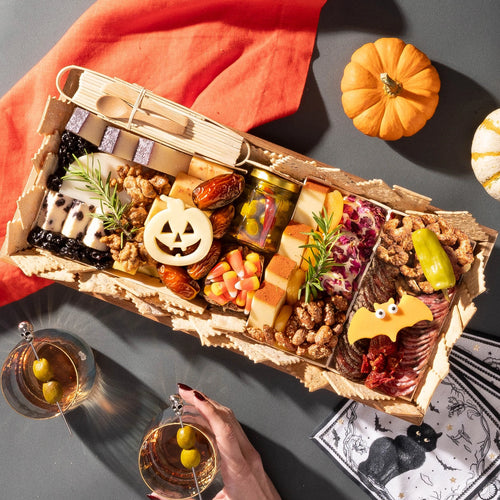


A classic charcuterie board artfully combines cured meats, cheeses, fruits, nuts, and condiments. The word “charcuterie” originally meant only cooked meats, but today’s boards often include abundant displays of meats, cheeses, dried and fresh fruits, toasted nuts and briny olives, plus honeys and jams. Even specialty providers like Boarderie curate gourmet spreads by mixing these core elements with style. A charcuterie spread balances flavors and textures, making it a versatile centerpiece at gatherings.
Charcuterie Board Essentials
Assemble the foundation of your spread by gathering the right charcuterie board essentials. These let you build and serve the platter efficiently.
-
Serving Board: The serving board acts as both the structural base and the visual anchor of the entire spread. Size matters more than material, as overcrowding makes even premium ingredients feel chaotic and hard to serve. A board should allow negative space so items can be grouped intentionally without touching. Wood offers warmth and grip, marble retains cool temperatures for cheese, and slate provides contrast for lighter foods. Food-safe surfaces are essential, especially for items placed directly on the board. Thickness also matters, as sturdier boards are easier to carry and less likely to warp over time. A well-chosen board frames the arrangement and guides how guests interact with it, encouraging grazing rather than grabbing. Rectangular boards suit long tables, while round boards work well for central placement.
-
Cheese Knives & Utensils: Proper utensils protect both the integrity of the food and the flow of the gathering. Different cheeses require different tools, as soft cheeses need spreading blades while firm varieties require sharper knives for clean cuts. Using a single knife for everything leads to flavor mixing and messy presentation. Small forks or picks allow guests to sample meats and cheeses without handling them directly, which keeps the board cleaner and more inviting over time. Utensils also slow down rushed serving, encouraging guests to engage with the spread thoughtfully.
-
Small Containers: Bowls and jars introduce structure and containment to items that would otherwise scatter across the board. Olives, pickles, nuts, and spreads benefit from being grouped, preventing moisture and oils from migrating into surrounding foods. Containers also create visual rhythm by adding height and separation, which makes the board easier to read at a glance. Choosing containers with varied sizes helps portion condiments appropriately without overwhelming the main components. Materials like ceramic or glass clean easily and do not absorb odors. Placement matters, as containers should be reachable without forcing guests to reach over other items. These vessels also make refilling simple, allowing hosts to refresh the board without rearranging everything.
-
Labels & Tongs (Optional): While optional, labels and tongs add clarity and control, especially when serving larger groups or unfamiliar ingredients. Labels prevent repetitive questions and allow guests with dietary preferences to navigate the board comfortably. Tongs and extra forks reduce direct contact with shared foods, which keeps the board hygienic and visually intact. They also encourage guests to take measured portions rather than grab handfuls.
When these essentials work together, the board feels intentional rather than improvised. Each tool supports ease, cleanliness, and visual balance, allowing the food itself to remain the focus. Thoughtful preparation transforms a simple assortment into a welcoming centerpiece that invites people to linger and share.

Meats for Charcuterie Boards
Selecting meats for charcuterie boards is crucial for authenticity and flavor variety. Plan on about 1–2 ounces of meat per person, or more if the board is the main attraction. Include at least three different types to cover textures and curing styles. For example, one might be a soft, sliced sausage (like salami or soppressata), another a dry-cured ham (prosciutto, jamón, or capicola), and a third a spreadable pâté or rillette. Additional options can include air-dried beef (bresaola), cooked sausages (like mortadella), or regional specialties (chorizo, speck, etc.). The goal is to balance fatty, spicy, and lean meats and to source from different animals (pork, beef, poultry) for variety.
-
Prosciutto / Jamón: Thinly sliced, salt-cured pork leg (Italian or Spanish style). Its silky texture and sweet-salty flavor are a charcuterie classic.
-
Salami & Sausages: A hard salami or a spicy Soppressata adds bold flavor. You can also include softer spreads like a peppery duck or chicken liver pâté (in a ramekin) for contrast.
-
Coppa (Capicola) or Bresaola: Coppa is a fatty pork shoulder charcuterie; bresaola is cured beef. Both give a different flavor profile from ham and salami.
-
Cooked/Smoked Meats: Options like smoked turkey, ham, or even a grilled kielbasa (for a heavier board) can round out the selection.
Offer different textures by making sure there’s a sausage, a dry-cured ham, and a pâté. Include at least one spicy and one milder cured meat among your selection.
Cheese Selection and Types
Equally important are the cheeses. The best cheeses for charcuterie boards are those that complement the meats and each other. Aim for 2–3 cheeses for a small gathering, mixing types of milk and textures. To organize your cheese selection:
-
Soft Cheeses (spreadable/creamy): Brie, Camembert, goat cheese (chèvre), or a double-cream Cambozola. These soft cheeses for charcuterie boards are easy to spread and pair well with spicy meats.
-
Semi-Soft: Havarti, Muenster, Fontina, or young blue cheeses. These have a little structure but are still creamy.
-
Firm/Hard Cheeses: Aged Cheddar, Gouda, Gruyère, Comté, or Manchego. Gouda is a good cheese for charcuterie. They’re bold without being overwhelming. Slicing them slightly thicker is fine.
-
Blue or Aged Cheeses: Stilton or Gorgonzola adds pungency and a tangy bite to the board; a little goes a long way.
Popular charcuterie cheeses often include brie (soft, creamy), sharp cheddar (firm), nutty Swiss varieties (Gruyère/Comté), and robust blue cheeses. Feel free to label your selections, but it’s not required. The key is offering flavor contrast. Salty meats with a tangy goat cheese, spicy salami with mild creamy cheese, etc. Let cheeses sit at room temperature for 30–60 minutes before serving to let aromas develop.
Charcuterie Accompaniments
A meat and cheese tray isn’t complete without plentiful sides and garnishes. Often called a meat cheese and cracker tray, the accompaniments add color and balance to rich proteins. These charcuterie accompaniments can be arranged around the meats and cheeses or in separate small dishes. Common additions include:
-
Breads & Crackers: Sliced baguette, toasted crostini, flatbreads, and an assortment of crackers. Provide at least one piece per slice of meat and extra cheese. Stacks of crackers can be placed vertically along the board for visual interest.
-
Fresh Fruits: Grapes, apple or pear slices, berries, figs. Fresh fruits provide sweetness and acidity; grapes are especially popular because they don’t brown and pair with everything. Seasonal fruits elevate the board.
-
Dried Fruits: Apricots, cranberries, cherries, figs. These chewable sweets complement salty meats.
-
Nuts: Marcona almonds, walnuts, pecans. Nuts add crunch and a toasty flavor. Marcona almonds are a charcuterie favorite for their buttery taste.
-
Pickled/Briny Items: Cornichons, olives, pickled onions, or pepperoncini. Their sharp acidity cuts through fatty meats.
-
Spreads and Sides: Fig jam, honey, whole-grain mustard, tapenade, or membrillo. Sweet and savory spreads let guests customize each bite. For example, honey with blue cheese, or mustard with pâté.
-
Fresh Veggies or Crudités: Bell pepper slices, radishes, cucumber spears. These are optional but add color and crunch. The more variety, the more interesting the board looks.
Scatter them between charcuterie meats and cheeses, or in small bowls, to create a rich, layered look.

Styling and Presentation
The visual arrangement can turn a simple snack platter into a statement centerpiece. Good cheeseboard styling involves varying colors, shapes, and heights. Here are some tips:
-
Group by Category: Keep meats and cheeses somewhat separate initially so that like items aren’t all mixed. For example, cluster one kind of meat in a decorative fan or rose shape, and set cheeses nearby.
-
Create Height and Texture: Roll or fold salami and prosciutto slices into spirals or cones. Stack bread or crackers in piles. Break hard cheeses into chunks. This adds dimension. Slicing meats into “little clumps and swirls” helps show off texture and makes them easy to grab.
-
Fill the Gaps: After placing meats and cheeses, tuck small bowls (mustard jar, olives) and loose items (nuts or grapes) into any empty spaces. A “cascade” of grapes or a mound of nuts can connect different areas of the board. Use dried fruit and herbs as tiny garnishes in bare spots for color.
-
Thoughtful Accents: Choose high-quality accompaniments for a high-end charcuterie board. Artisanal honey, fleur de sel, or gourmet jams convey luxury. Edible flowers or fresh herbs can also dress up a board for a special occasion.
-
Clean Lines: Avoid clutter. If one side is pale (light crackers, cheese), add dark olives or berries there to balance the palette. Aim for about 5 items of each type (meat, cheese, fruit, nuts) to allow for symmetry.
With these styling tips, your board will not only taste great but also look tempting. Remember that every bite should be meaningful. Intentionally pairing elements creates a cohesive design.
How to Make a Charcuterie Board
Wondering how to make a charcuterie board from start to finish? Break it into simple steps:
-
Gather tools and layout: Set out your board, bowls, and utensils before adding food. Arrange empty ramekins/jars (for olives, nuts, etc.) on the board first – sticky notes can help plan placement.
-
Arrange the meats first: Divide the board into sections and place one type of meat in each area. Roll or fold slices for visual interest. This becomes the backbone of your platter.
-
Add the cheeses next: Position cheeses near complementary meats. You might angle wedges for flair. For hard cheeses, pre-slicing or crumbling encourages guests to grab them easily, while soft cheeses can be left whole but with a small wedge cut out for access.
-
Place condiments and spreads: Nestle small bowls or jars of mustard, honey, jam, or tapenade in the remaining space. For instance, put honey near blue cheese or grainy mustard with smoked ham.
-
Fill in with fruits and nuts: Scatter fruits (grapes, apple slices) and nuts to fill gaps and add color. Run a line of crackers or baguette slices along the edge or in a crack through the board. Position these last so nothing gets crushed.
-
Final touches: Tuck in any remaining pickles or extra items. A sprinkle of sea salt, a few sprigs of herbs, or a crack of black pepper over soft cheese can add gourmet flair.
The key is to balance taste and appearance. Each element should be easy to reach. Following these steps ensures your board looks intentional and abundant.

Wine and Meat Pairing
No charcuterie experience is complete without a thoughtful wine and meat pairing. The high fat and salt of cured meats call for wines with good acidity or effervescence to cleanse the palate. That means:
-
Sparkling Wines: A dry Cava or Lambrusco (Italian sparkling red) is often ideal. For example, a fruity but dry Lambrusco from Emilia pairs beautifully with mixed meats and cheeses. Champagne or Prosecco also works, offering crispness.
-
White Wines: Crisp whites like Sauvignon Blanc, Chenin Blanc, or a dry Riesling complement creamy cheeses and mild meats. Their zesty acidity cuts fat nicely.
-
Rosé: A dry rosé (especially a Provençal-style rosé) can be versatile, pairing well with salty prosciutto and even some pickles.
-
Light Reds: Pinot Noir or Gamay (Beaujolais) are safe bets for mixed boards: they have moderate tannins and bright fruit. Cabernet or Malbec can overpower delicate flavors, so choose lightly oaked or chilled versions if using big reds.
Pair rich meats and pungent cheeses with wines that have freshness or bubbles. The right wine and meat pairing lets each bite shine: for instance, a nutty, aged Gouda pairs well with a juicy Zinfandel, or a creamy Brie pairs well with a chilled white. By balancing richness with acidity, your charcuterie spread becomes a true tasting experience.
Sources
-
Food Network – The Only Guide to Building a Charcuterie Board You’ll Ever Need
-
Food & Wine – How to Build a Charcuterie Board That Wows Every Time
-
Serious Eats – Make-Ahead Tips for the Ultimate Charcuterie Board
-
Wine Enthusiast – How to Build a Charcuterie Board Like a Pro
-
St. Louis Magazine – Expert Tips for Preparing Holiday Charcuterie Boards
