


The way businesses thank their clients has changed more in the past five years than in the previous twenty. Generic gift baskets stuffed with industrial chocolates and shrink-wrapped crackers have given way to thoughtfully curated food experiences that arrive ready to enjoy. At the center of this shift sits a simple truth. Clients remember how they were made to feel, and food has a unique ability to make people feel valued. Gourmet food gifts now play a strategic role in business development rather than being an obligatory line item in a marketing budget. This blog post explores why the shift happened and how to build a client appreciation strategy that drives real returns.
The Rise of Gourmet Food Gifts in Modern Client Appreciation
The pandemic forced a complete rethink of how businesses connect with clients who were no longer accessible through office visits, conferences, or business lunches. Companies that once relied on in-person touchpoints suddenly needed shippable, memorable ways to maintain connection. The corporate gifting market grew from roughly $242 billion in 2018 to an estimated $312 billion by 2023, with food and gourmet categories leading much of the expansion. Remote work permanently changed expectations for what a thoughtful business gesture looks like.

Promotional pens and logo-embossed water bottles once dominated corporate gifting budgets. These items now often end up in donation bins or junk drawers within weeks. While branded items still drive recall, recipients increasingly view them as marketing collateral rather than genuine gestures of appreciation.
The cultural shift toward sustainability also plays a role. Clients are increasingly skeptical of gifts that contribute to landfill waste or feel like thinly disguised advertising. Edible gifts for clients sidestep this issue entirely because they get consumed and shared, leaving behind goodwill rather than clutter. Today's professionals value experiences and craftsmanship over branded objects. A gourmet board featuring imported cheeses and house-made preserves communicates a level of effort that no branded mug can match. This is the same trend that has powered the rise of experience gifting, premium subscription boxes, and curated meal kits in consumer markets.
Why Food Gifts Outperform Traditional Corporate Presents
Universal Appeal
Few gift categories cross generational, geographic, and cultural lines as smoothly as food. While a luxury watch or a leather portfolio may suit some recipients, a thoughtfully composed charcuterie spread tends to delight nearly everyone with even modest dietary flexibility.
The Psychology of Sharing Food
Food creates social moments. When a client receives a beautifully arranged board, they often share it with their family, their team, or their office, and those shared moments become memories tied to the sender's brand. Shared food experiences build stronger interpersonal bonds than nearly any other form of social interaction. This sharing dynamic multiplies the impact of a single gift. A board sent to one executive can easily reach a dozen colleagues, each of whom now associates the experience with the company that sent it.
Memorability
A printed mug becomes invisible by week two. A premium food gift creates a sensory memory that lingers far longer. Taste, smell, and visual presentation all contribute to encoding the experience deeply, which is why so many marketing teams have shifted budget toward gourmet food gifts for clients in the past three years.
The Business Case for Investing in Client Appreciation Gifts
Increasing customer retention by just 5% can boost profits anywhere from 25% to 95% across different service industries. Client appreciation programs are among the lowest-cost, highest-leverage tools for retention because they signal that a client matters beyond their next invoice. Clients who feel valued refer business at meaningfully higher rates. Customers who received unexpected gifts from their service providers were 38% more likely to recommend that provider within the following year. Client appreciation gifts are a marketing investment with measurable downstream returns.
In categories where price, service, and product quality have largely converged, the relationship is the differentiator. A timely corporate gift delivery that arrives at the right moment can be the deciding factor when a client evaluates renewal or a referral conversation. Marketing teams increasingly track client gifting against retention rates, expansion revenue, and Net Promoter Score. Companies with formal client appreciation programs report 20% higher account growth on average than those that gift sporadically.
What Makes a Gourmet Food Gift Stand Out
Quality and Presentation
A small, beautifully arranged board outperforms a generic basket every time. The visual moment of opening matters as much as the food itself. Recipients photograph and share gifts that look impressive, which extends the gift's reach far beyond the original recipient.
The Importance of Curated, Considered Selections
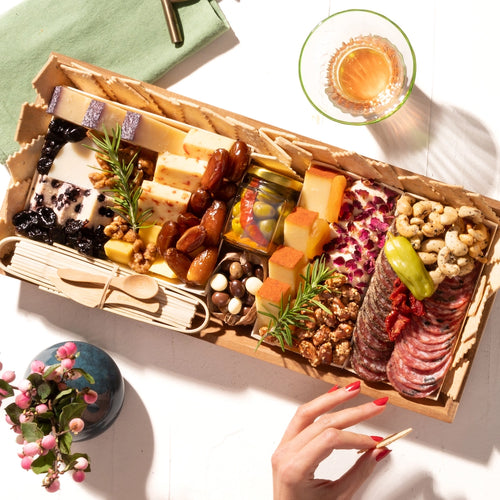
The hallmark of a memorable food gift is intentionality. Each component should feel chosen rather than assembled. A premium gourmet charcuterie board delivery typically pairs aged cheeses with complementary cured meats, dried fruits, and accompaniments selected to balance flavor profiles.
The classic shrink-wrapped gift basket signals minimal effort. By contrast, a corporate charcuterie board arrives plated and ready to enjoy with no assembly required, creating a moment of delight rather than a chore of unwrapping plastic.
Why Charcuterie Boards Have Become a Go-To Client Gift
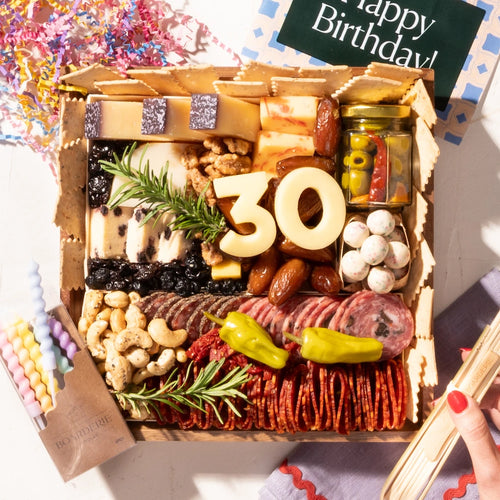
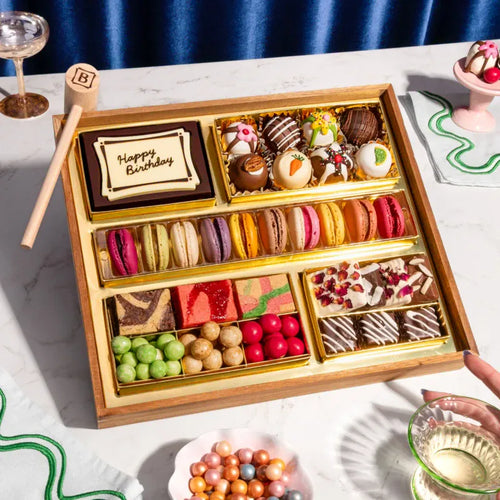
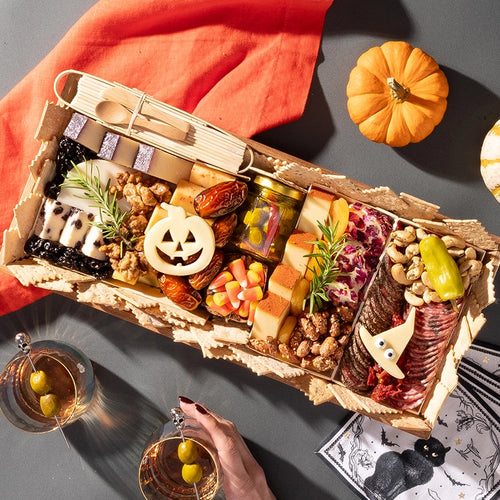
Instagram-worthy presentation matters in a world where photos travel further than email subject lines. A stunning board often gets photographed and shared, providing organic visibility for the sender's thoughtfulness. The components below contribute to making a charcuterie gift unforgettable, and they distinguish premium services like Boarderie from generic gift basket vendors:
- Carefully Curated Cheese Selection: An exceptional board features three to five distinct cheese varieties chosen for flavor balance, including a soft cheese, a firm cheese, an aged option, and a blue or specialty selection. Sourcing from named producers signals quality.
- Premium Cured Meats: Imported and house-cured selections of prosciutto, salami, soppressata, or coppa anchor the savory side of the board. Quality is communicated through provenance, with European varieties carrying particular weight in business gifting contexts.
- Sweet and Savory Accompaniments: Marcona almonds, dried apricots, fig jam, honeycomb, and high-end cornichons round out the board with textural contrast. These small details are what often differentiate forgettable boards from memorable ones, and they signal a level of curation beyond the basics.
- Artisanal Crackers and Breads: Handcrafted crisps, lavash, and rustic breadsticks complete the board's savory-and-sweet experience. Generic supermarket crackers immediately downgrade the perceived quality of everything else on the board, which is why premium services avoid them entirely.
- Thoughtful Presentation Elements: Edible flowers, fresh herbs, and seasonal garnishes elevate the board's visual impact. Premium serving surfaces add a presentation layer that keeps the gift ready to photograph and share on Instagram when it arrives at the recipient's door.
These components separate the boards that are remembered from those that are politely consumed.
Strategic Timing for Sending Client Gifts
Holiday Client Gifts vs. Year-Round Opportunities
December gifting remains popular, though it also means competing with every other vendor sending holiday client gifts at the same time. Gifts arriving in January, March, or July often make a stronger impression precisely because they stand out from the holiday flood.
Project Milestones and Contract Renewals
The successful close of a project or a major launch is a natural moment of gifting. These send a clear signal that you are paying attention to the client's wins, not just your own.

Off-Cycle Gifting That Surprises and Delights
The unexpected gift carries the most emotional weight. A spring-themed charcuterie gift delivery in April or a summer board sent for no particular reason creates a memorable surprise that contractually obligated holiday gifts rarely match.
Common Pitfalls to Avoid in Corporate Gifting
Sending Generic, Mass-Produced Items
Gifts that feel templated and flat. Recipients can sense when a gift was bulk-ordered with no thought given to who would receive it.
Overlooking Dietary Restrictions and Preferences
A premium gift means little to a recipient who cannot eat it. Tracking simple notes about dietary preferences, allergies, or alcohol restrictions transforms generic gifting into thoughtful relationship-building.
Excessive Branding That Feels Promotional
A gift covered in your company logo reads as marketing collateral. The most effective client gifts are discreet cards or notes rather than embossed packaging.
Underestimating Delivery Logistics
Perishable food gifts require careful coordination. A charcuterie board delivery nationwide service that handles cold-chain logistics, scheduling, and tracking eliminates the operational risk of food gifts arriving warm or late.
The Logistics of Sending Gourmet Food Gifts at Scale
Nationwide Delivery
Modern gifting programs require partners that ship nationally with consistent quality. Cold-chain logistics, careful packaging, and delivery scheduling all matter when a team needs to order charcuterie board delivery for clients across multiple states. The best providers maintain consistent quality whether the recipient is in Manhattan or rural Montana.
Personalization at Scale Without Losing Authenticity
The challenge with large gifting programs is maintaining authentic personalization. Handwritten notes and recipient-specific gift selections preserve the personal touch even when the program serves hundreds of clients per quarter.
Building a Client Appreciation Program That Works Long-Term
A sustainable program is built in stages. The steps below outline the sequence that leading firms follow when establishing a corporate gifting program that produces measurable returns:
- Define Your Annual Gifting Budget: Allocate a percentage of total client revenue toward gifting and relationship-building activities, with most well-run programs allocating between 1% and 3% of account revenue scaled by tier. Treating this as marketing rather than overhead encourages investment proportional to expected returns.
- Map Your Gifting Calendar: Build a documented calendar that schedules gifting across the year. Anchor moments include the holiday season, project completions, contract renewals, and surprise touches in off-cycle months that catch recipients when nobody else is gifting them.
- Select a Reliable Gifting Partner: Choose a vendor with proven nationwide delivery, consistent quality, and responsive customer service. Test their service with a small order before committing to volume to confirm everything meets your standards.
- Implement a Tracking System: Build a simple database recording every gift sent, the recipient, the occasion, and any follow-up response received. Linking this to retention and NPS data lets the program prove its return on investment to leadership over time.
- Add Layers of Personalization: Pair every gift with a handwritten note, recipient-specific message, or curated selection. The personal layer transforms the program from a vending machine into a relationship-building tool that recipients remember and reciprocate over time.
Following this sequence ensures the program produces consistent results across hundreds of accounts.
The Future of Client Gifting
Why the Trend Toward Gourmet Continues
Gourmet food gifts have become the go-to move for client appreciation because they deliver what every relationship needs at the right moment: thoughtfulness, quality, and a memorable experience. From premium gourmet gift baskets for clients to fully arranged ready-to-eat charcuterie boards, the modern gifting landscape gives professionals the ability to create real moments of delight without the operational headaches of past eras.

The companies winning at client gifting in 2026 treat the practice as a strategic discipline. They invest in a gifting calendar, choose partners that handle the logistics with care, and measure the downstream impact on retention and referrals. Business gift baskets of the past have given way to a new generation of curated, photo-worthy boards that arrive ready to enjoy at the recipient's door. To plan your next round of client gifts or to structure a corporate gifting program that scales, the team at Boarderie can help build something that delivers consistent results across hundreds of relationships.
Sources
- Reichheld, F. F., & Sasser, W. E. (1990). Zero defections: Quality comes to services. Harvard Business Review, 68(5), 105-111. Retrieved from HbrZero Defections: Quality Comes to Services
- University of Chicago Booth School of Business. (2019). Shared experiences and interpersonal bonding: Evidence from food rituals. Journal of Behavioral Decision Making, 32(3), 245-261.
- Bohns, V. K., & Newark, D. A. (2022). Gift-giving and customer loyalty in B2B service relationships. Journal of Marketing Research, 59(4), 712-728.
- Coresight Research. (2023). U.S. corporate gifting market overview and growth trends. Coresight Research. Retrieved from CoresightResearch Archives
- Knack Shops. (2023). State of corporate gifting: Annual industry report. Knack.
- Promotional Products Association International. (2022). Promotional products and brand recall research. PPAI Research.
- Forbes Business Council. (2023). Corporate gifting trends and the rise of premium food categories. Forbes. Retrieved from Forbes
- Bain & Company. (2020). Customer retention economics: A long-term study of service industries. Bain & Company Insights.
- Statista Research Department. (2023). Corporate gifting market size and forecast 2020-2027. Statista.
